Showing posts with label Galbladder Stone. Show all posts

Gall Bladder Stones

Definition:

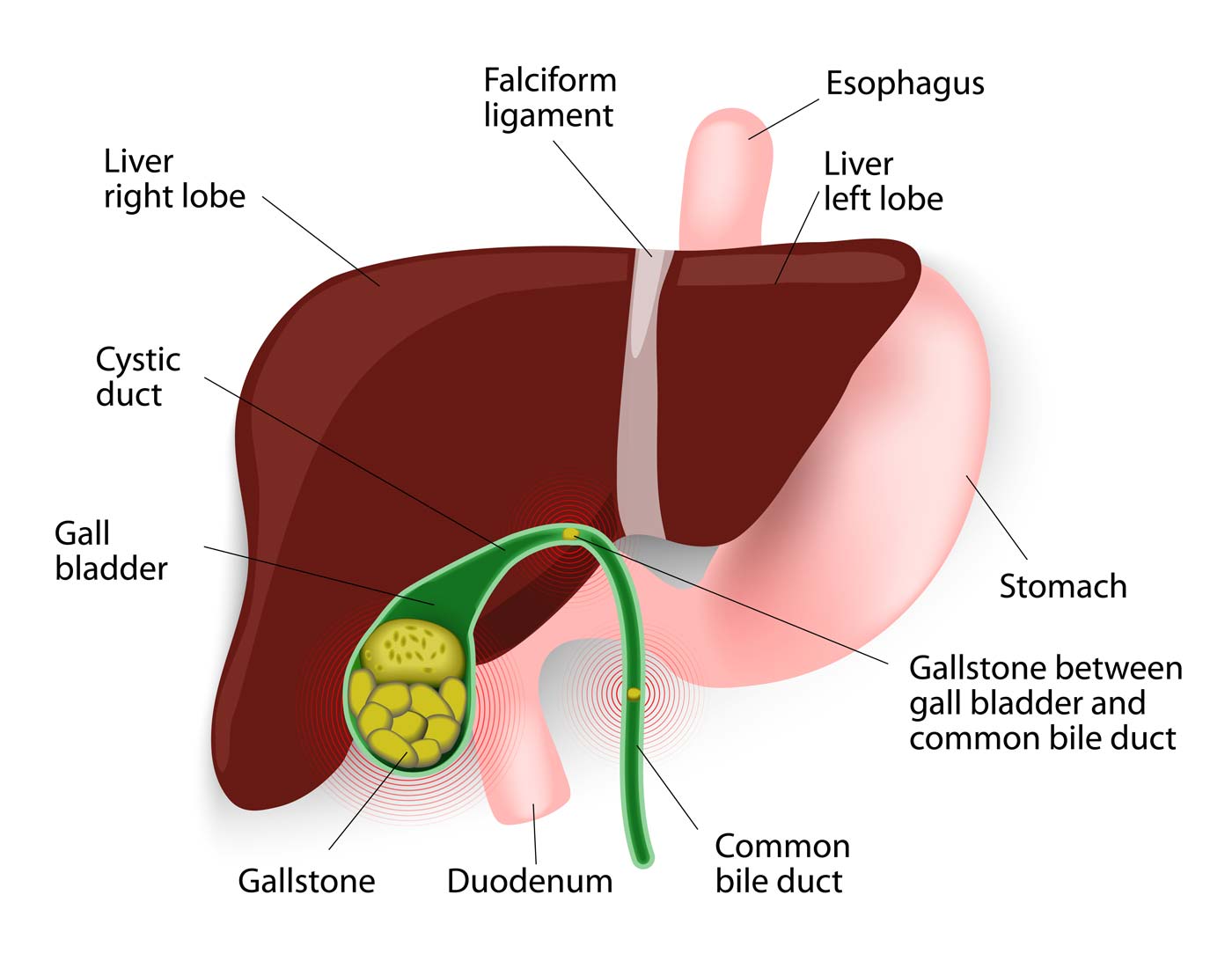
Gallstones are clumps of crystallized cholesterol or some pigments in the gallbladder. This condition is fairly common (affects 11% of general population) women are twice as likely as men to develop gallstones. (Medical dictum for Gallstones is: It's a disease of fat female of forty).
Gallbladder is a small sac situated just under the liver and it produces bile juice that is essential for proper digestion of fats. The bile juice mainly contains cholesterol, water, bile salts and a pigment called Bilirubin. When the proportion of these contents is altered in the bile juice, gallstones start forming.

Types of Gallstones:

There are two basic types of gallstones:
  • Cholesterol gallstones: Made up of cholesterol (accounting for about 80% of cases)
  • Pigment stones: Made up of the pigment Bilirubin


 Factors contributing to development of gallstones
  • Obesity
  • It's twice as common in females as compared to males
  • People over age of 60 years are at higher risk
  • Fasting, diabetes, rapid weight loss can also lead to formation of gallstones in some cases


Remarks:

All the factors that form stone are present in the bile under normal circumstances; however, they are in a dissolved state. If there is increase in concentration of cholesterol or pigments, they crystallize and precipitate out as stones. Factors such as increasing age, pregnancy, obesity, liver disorders, infections can have impact on development of gallstones. Some studies suggest that genetics and heredity factors are at the root of this condition that makes one prone to have gallstones.

Homeopathic Treatment for Gallbladder Stones :

At aarogya clinic multi specialty centre,  We remove Gallbladder Stones without surgery. Within short period with small amount of money we can remove your Gallstones.
Reach us with this contact details, 
No.1, Anna Nagar, East Main Road,
Tolgate, Vellore, TamilNadu, India  – 632 001.
+91 416-2225444, +91 416 2222444
admin@aarogyaclinic.in
Aarogya Clinic Multispeciality Centre has treated more than 10,000 people who affected by Gallbladder Stones, Since 2000. We had removed 90% of the Gallstones without surgery by using Homeopathy treatment.

What are Gallbladder Stones ?

Gallstones are hard deposits of cholesterol, bile salts and bilirubin in your gall bladder.The medical term for gallstones is cholelithiasis. Cholelithiasis is the most common reason for gallbladder removal.

OUR TREATMENT STRATEGY FOR GALL BLADDER STONES

Immediate Pain Relief: Provide fast and immediate pain relief. If at all the pain/colic occurs to the patient, we are able to do this with our pain killer which is specific for this disease itself. Patients have reported pain relief usually within 5 to 20 minutes of taking the medicine in almost all cases. More importantly, the relief that ensues from this medication is a complete one and the patient feels normal without any remaining soreness. Most importantly this medicine does not have any side-effects unlike any other painkiller in conventional medicine. The role of this medicine is not only to provide immediate relief to the pain but also to reduce the chances of recurrence of colic.
Prevent Incidents of Colics: Provide medication and management to prevent the occurrence of pain due to gall stones or gall colic. Almost all patients have never had colic once they started our treatment and followed our extremely simple management advice.
Dissolve the Stones: Provide medication that gradually dissolves the stone. This is achieved by using our medication continuously over a period of time. The length of this treatment depends on the size and chemical composition of the stone and varies from case to case. However, during this period of prolonged treatment, the patient remains free from any symptoms related to this disease and is able to carry on his/her normal life.

What are the symptoms?

Most people who have gallstones do not have symptoms. Symptoms that may occur include:
  • pain in the right upper abdomen that may radiate to the back
  • pain between your shoulder blades

What are the risk factors for developing gall stones:

  • Family history of gallstones
  • Women are twice as likely as men to develop gallstones
  • Overweight
  • High cholesterol
  • High-fat diet
  • Rapid weight loss
  • Over age 60

What are the complications of gallstones?

 Complications of gallstones may include:
  • Inflammation of the gallbladder (cholecystitis)
  • Blockage of the common bile duct with jaundice
  • Blockage of the pancreatic duct and inflammation of the pancreas (pancreatitis)
  • Increased risk of gallbladder cancer

Diagnosis

The most common tests to detect gallstones are abdominal ultrasound and computerized tomography (CT).

Homeopathic treatment for gallstones:

Homeopathy successfully dissolves small and medium-sized gallstones and help you avoid the gallbladder removal. Homeopathic medicines for dissolving gallstones costs very less compare other medicine services.
Homeopathy also provides fast pain relief in gallbladder attacks and can be used for prevention and treatment of biliary colic. The medicines are natural, effective and have no side effects. In patients with gallbladder removal homeopathy can alleviate the digestive disorders after surgery.
An effective gallbladder stones treatment in advanced homeopathy
means:
  • gall bladder stones become dissolved and removed without operation or surgery
  • immediate pain relief is addressed
  • incidents of colic are very less
BASIC SYMPTOM DESCRIPTION:

Generally the main symptom that are associated with the Gall Stones is Gall Colic or Biliary Colic or severe steady pain. This if experienced by a patient carrying the stones can last anywhere between 30 minutes to 5 hours on each occasion. Even after the colic subsides there is a soreness that remains in the upper abdomen or epigastrium (Right Upper Quadrant) for upto 24 hours or more.

Besides this acute phase of the disease which causes intolerable pain/colic occasionally or even frequently the other symptoms that may also occur include - nausea,indigestion,loss of appetite, acidity, abdominal wind/gas/flatulence, etc. Though all of these may not be directly linked to the Gall Stone clinical observations have shown a very high concurrence of these symptoms with Gall Stone patients.


Welcome to aarogya multi specialty clinic – one of the largest private homeopathy medical clinics in Vellore district. Since 1993 aarogya multispeciality Clinic (AMC) has been providing qualified medical care to you and your family.

A Complete Homeopathy Clinic in Vellore, Tamilnadu, India. We are specialized in Homeopathy, Acupuncture and Physiotherapy. 


Aarogya multispecialty clinic is a Acute and chronic care facility, committed to delivering excellence in healthcare to the local and expatriate communities in vellore,Tamilnadu,India. AMC has all capacities needed for providing complex of medical services.

For more information. . . http://aarogyaclinic.in/
What is psoriasis?


Psoriasis is an inflammatory skin condition. The obvious sign is the colour change associated with the plaques (the raised patches in the skin), although this is more obvious where there is little scale. In fair-skinned people, the plaque will look red (sometimes referred to as salmon pink), whereas in dark-skinned individuals the plaque tends to look a darker shade of the normal skin. Often, however, the white scaling is thick and hides the redness, so psoriasis looks thick, white and, crusty on exposed surfaces regardless of the underlying skin colour. The thickening is caused by the greatly increased ‘turnover’ of the skin cells. Normally, a living skin cell moves upward from the bottom layer of skin, loses its nucleus and dies. It is then largely made up of a protein called keratin and is shed from the surface of the skin as new cells go through the same process and replace it from underneath. The whole process takes around 28 days, but in psoriasis it is greatly speeded up to 3-4 day cycle. Living cells are then much closer to the surface, and as they still need a blood supply, the vessels lie closer to the surface, leading to the redness and heat that many people with psoriasis complain of. The fact that the surface cells are being replaced before they are shed results in a thick layer of scale, which, as everyone with the condition knows, flakes off readily and abundantly.

It is essentially important to understand what psoriasis is not. This can be summarized by saying that it is:
  • Not contagious
  • Not cancer
  • Not related to diet
  • Not allergic
Clinical features of psoriasis
Sites of predilection
Include scalp, retro auricular area, knees, elbows, sacrum, and nails.
Lesion morphology – sharply bordered erythematous patches and plaques with silvery scale
  • Psoriasis vulgaris
Chronic plaque type psoriasis
v    Small papules evolve through confluence in to large irregular, well-circumscribed plaques, 3-20 cm.
v    Silvery scale is extremely typical
v    Sites of predilection include knees, elbow, sacrum, scalp, retinoauricular area
v    Untreated, the plaques can remain stable for months or years.
v    May be less distinct in  dark skin
Guttate psoriasis
v    Appears as exanthema over 2-3 weeks; starting with small macules and papules that evolve into 1-2 cm plaques with silvery scale
v    Favor the trunk, less often extremities or face
v    Most patients are children or young adults, usually after streptococcal pharyngitis; sometimes following treatment or tonsillectomy, the psoriasis resolves completely and never returns
Intertringinous psoriasis
v    Involves axillae and groin; often misdiagnosed.
v    Macerated and fissured; thick plaques and silvery scale usually missing
v    Requires less aggressive therapy
v    Inverse psoriasis
v    Overlaps with intertrginious; form where involvement is flexural and classical sites such as knees and elbows are spared
  • Psoriatic erythroderma
v    Involves the entire integument: can develop suddenly out of a Guttate psoriasis or from long standing psoriasis following too aggressive therapy or abrupt discontinuation of medications.
  • Pustular psoriasis
v    Numerous pustules on palms and soles
  • Drug induced psoriasis
v    Medications are common triggers for psoriasis
How psoriasis is diagnosed?
Psoriasis is often diagnosed by a dermatological or primary care physician by its characteristic appearance and locations on the body. If a person has the skin changes typical of psoriasis, a diagnosis can be made clinically by examination alone, based on the skin’s appearance due to psoriasis, a physician will usually be able to diagnose psoriasis and being treating the skin immediately.
If person looks different than most cases, appears in an unusual location, further test may be needed. The definitive test when a clinical diagnosis of skin disease is a skin biopsy. Usually one test is required, but it may be repeated if the results are not clear or the disease changes over time. No blood test exists to diagnose psoriasis, and psoriasis does not cause abnormal blood tests for most people. The most common reason to draw blood when treating people for psoriasis is to make sure it is safe to begin a new medication or to watch for a medicine’s possible side effects.
The evaluation of psoriatic arthritis may include X-ray, joint tests, and blood panels to look for other causes of arthritis.

Psoriasis treatment

Patient should be encouraged to expose maximum to sunlight and avoid trauma during the active phase.
Homeopathic treatment of psoriasis – Homeopathy is one of the most popular holistic systems of medicine. The selection of remedy is based upon the theory of individualization and symptoms similarity by using holistic approach.
This is the only way through which a state of complete health can be regained by removing all the sign and symptoms from which the patient is suffering. The aim of homeopathy is not only to treat psoriasis but to address its underlying cause and individual susceptibility. As far as therapeutic medication is concerned; several well-proved remedies are available for psoriasis treatment that can be selected on the basis of cause, location, sensation, modalities and extension of the psoriasis. For individualized remedy selection and treatment, the patient should consult a qualified homeopathic doctor in person. Few important remedies for the homeopathic treatment of psoriasis are given below:
  • Arsenic Album – excellent psoriasis remedy in which psoriasis, worse by cold application and wetness, better by warmth.
  • Sulphur – great psoriasis remedy helpful in so many other skin manifestations also
  • Kali Brom – remarkable psoriasis remedy in which there is syphilitic psoriasis. Skin cold, blue, spotted corrugated, large, indolent, painful pustules.
  • Kali Ars – Kali Ars is a very well proved psoriasis remedy with patches on back, arms and spreading from elbows; scaly itches, scaling off leaves behind red skin.
  • Thyrodinum – one of the best psoriasis remedy for chilly and anemic subjects. Dry impoverished skin; cold hands and feet
  • Radium Brom – psoriasis of penis, itching eruptions on face oozing, Patchy erythema on forehead

Chronic renal failure is a slowly worsening loss of the ability of the kidneys to remove wastes, concentrate urine, and conserve electrolytes.


Chronic kidney disease (CKD), also known as chronic renal disease, is a progressive loss of renal function over a period of months or years. The symptoms of worsening kidney function are unspecific, and might include feeling generally unwell and experiencing a reduced appetite. Often, chronic kidney disease is diagnosed as a result of screening of people known to be at risk of kidney problems, such as those with high blood pressure or diabetes and those with a blood relative with chronic kidney disease. Chronic kidney disease may also be identified when it leads to one of its recognized complications, such as cardiovascular disease, anemia or pericarditis.

Chronic kidney disease is identified by a blood test for creatinine. Higher levels of creatinine indicate a falling glomerular filtration rate (rate at which the kidneys filter blood) and as a result a decreased capability of the kidneys to excrete waste products. Creatinine levels may be normal in the early stages of CKD, and the condition is discovered if urinalysis (testing of a urine sample) shows that the kidney is allowing the loss of protein or red blood cells into the urine. To fully investigate the underlying cause of kidney damage, various forms of medical imaging, blood tests and often renal biopsy (removing a small sample of kidney tissue) are employed to find out if there is a reversible cause for the kidney malfunction.

Recent professional guidelines classify the severity of chronic kidney disease in five stages, with stage 1 being the mildest and usually causing few symptoms and stage 5 being a severe illness with poor life expectancy if untreated. Stage 5 CKD is also called established chronic kidney disease and is synonymous with the now outdated terms end-stage renal disease (ESRD), chronic kidney failure (CKF) or chronic renal failure (CRF).


Causes of Chronic renal failure:

The most common causes of CKD are diabetic nephropathy, hypertension, and glomerulonephritis. Together, these cause approximately 75% of all adult cases. Certain geographic areas have a high incidence of HIV nephropathy.

Historically, kidney disease has been classified according to the part of the renal anatomy that is involved, as:

• Vascular, includes large vessel disease such as bilateral renal artery stenosis and small vessel disease such as ischemic nephropathy, hemolytic-uremic syndrome and vasculitis
• Glomerular, comprising a diverse group and subclassified into

1. Primary Glomerular disease such as focal segmental glomerulosclerosis and IgA nephritis
2. Secondary Glomerular disease such as diabetic nephropathy and lupus nephritis

• Tubulointerstitial including polycystic kidney disease, drug and toxin-induced chronic tubulointerstitial nephritis and reflux nephropathy.
• Obstructive such as with bilateral kidney stones and diseases of the prostate.
• Gout.

Symptoms of Chronic renal failure
Initial symptoms may include the following:

• Fatigue
• Frequent hiccups
• General ill feeling
• Generalized itching (pruritus)
• Headache
• Nausea, vomiting
• Unintentional weight loss.
• Anorexia.
• Polyuria.
• Nocturia.
• Swelling of face.

Later symptoms may include the following:

• Blood in the vomit or in stools
• Decreased alertness, including drowsiness,confusion, delirium, orcoma
• Decreased sensation in the hands, feet, or other areas
• Easy bruising or bleeding
• Increased or decreased urine output
• Muscle twitching or cramps
• Seizures
• White crystals in and on the skin (uremic frost).
• Hallucinations.
• Fits.
• Stupor.

Additional symptoms that may be associated with this disease:

• Abnormally dark or light skin
• Agitation
• Breath odor
• Excessive nighttime urination
• Excessive thirst
• High blood pressure
• Loss of appetite
• Nail abnormalities
• Paleness
• diarrhea.
• Oliguria.
• Dyspnoea.
• Pain in chest.
• Hiccough.
• Cramps.
• Bone pains.
• Bruises.
• Epistaxis.

Complications

• Anemia
• Cardiac tamponade
• Changes in blood sugar metabolism
• Congestive heart failure
• Decreased functioning of white blood cells
• Decreased immune response
• Decreased libido, impotence
• Dementia
• Electrolyte abnormalities including hyperkalemia
• Encephalopathy
• End-stage renal disease
• Fractures
• Hemorrhage
• High blood pressure
• Increased infections
• Joint disorders
• Liver inflammation (hepatitis B or hepatitis C)
• Liver failure
• Loss of blood from the gastrointestinal tract
• Menstrual irregularities,mscarriage, infertility
• Nerve damage
• Pericarditis
• Peripheral neuropathy
• Platelet dysfunction
• Ulcers
• Seizures
• Skin dryness, itching /scratching with resultant skin infection
• Weakening of the bones
• Uraemic coma.
• Cardiac arrhythmia.


Acne is a general term for pimples and deeper pustules that are clogged pores. If severe enough acne can leave permanent scars.

Acne is an inflammatory skin disorder of the skin’s sebaceous glands and hair follicles that affects about 80% of people between the ages of 12 and 24. During puberty high levels of hormones are produced in both girls and boys. This leads to the production of large quantities of sebum. Sebum is an irritant that can clog the pores and form a pimple which may become infected and form a pustule. Hormones don’t go away after adolescence. Many women still get premenstrual acne from of the release of progesterone after ovulation.

Acne is a disease that affects the skin’s oil glands. The small holes in your skin (pores) connect to the oil glands under the skin. These glands make an oily substance called sebum. The pores connect to the glands by a canal called a follicle. Inside the follicles, oil carries dead skin cells to the surface of the skin. A thin hair also grows through the follicle and out to the skin. When the follicle of a skin gland clogs up, a pimple grows. Most pimples are found on the face, neck, back, chest, and shoulders. Acne is not a serious health threat but it can cause scars.


The exact cause of acne is unknown, several related factors are:

§ Hormonal activity supposed to be responsible, such as menstrual cycles and puberty.

§ Increase in hormones called androgens (male sex hormones), which causes sebaceous glands to enlarge and make more sebum.

§ Hormonal changes related to pregnancy can also cause acne.

§ Another factor is heredity or genetics. Researchers believe that the tendency to develop acne can be inherited from parents. For example, studies have shown that many school-age boys with acne have a family history of the disorder.

§ Accumulation of dead skin cell.

§ Bacteria in the pores, to which body becomes allergic.

§ Skin irritation or scratching of any sort will active the inflammation.

§ Starting or stopping birth control pills.

§ Heredity (if your parents had acne, you might get it too).

§ Some types of medicine.

§ Greasy makeup.

In some patients, contributing factors may be:

Pressure: In some patients, pressure from helmets, chinstraps, collars, and the like can aggravate acne.

Drugs: Some medications may cause or worsen acne, such as those containing iodides, bromides, or oral or injected steroids (either the medically prescribed prednisone or the steroids bodybuilders or athletes take.) Most cases of acne, however, are not drug-related.
Occupations: In some jobs, exposure to industrial products like cutting oils may produce acne.

Pathophysiology of Acne

§ Excessive secretion of oils from the sebaceous glands accompanies the plugging of the pores with naturally occurring dead skin cells (corneocytes) blocking hair follicles.

§ The accumulation of these corneocytes in the duct appears to be due to a failure of the normal keratinization process in the skin which usually leads to shedding of skin cells lining the pores.

§ Oil secretions are said to build up beneath the blocked pore, providing a perfect environment for the skin bacteria Propionibacterium acnes and the lipophilic (oil/lipid-loving) yeast Malassezia to multiply uncontrollably.

§ Under the microscope, however there is no evidence of pooled trapped sebum. Indeed the oil perolates through the plugged duct onto the surface.

§ In response to the bacterial and yeast populations, the skin inflames, producing the vision lesion.

§ The face, chest, back, shoulders and upper arms are especially affected.

###

Acne is a group of skin rashes with different causes named as:-

Acne vulgaris

It is most commonly experienced around puberty, typically of the face and shoulders / chest.

Acne rosacea

A red rash predominantly on the face.

Acne keloidalis nuchae (pseudofolliculitis nuchae)

A rash caused by shaving.

Acne conglobata (Hidradenitis suppurativa)

Chronic abscesses or boils of sweat gland and hair follicle; in the underarms, groin, buttocks and under the breasts in women.

Acne cosmetica

Acne caused by use of cosmetics.

Acne fulminans

An extreme form of acne conglobata.

Acne medicamentosa

Acne cause by starting or stopping medicine.

Baby acne

A rash seen on the cheeks, chin, and forehead of infants.

Chloracne

Acne caused by exposure to chlorinated hydrocarbons such as dioxins or PCBs.
Hair loss, as the name itself implies, refers to the falling of hair from scalp / head; another term used to describe this is alopecia. It is a broad term that also includes thinning of hair. While genetics plays a vital role in this condition that afflicts both men and women, there are several other factors that are involved in bringing on this problem in people. In order to understand the reasons for hair fall better, it is essential that you learn about the various growth stages of hair. The hair growth cycle consists of three phases:


The first phase is the anagen phase, which is an active phase in which the hair grows. This phase lasts for around 2-7 yrs.
The second phase is the catagen phase. The catagen phase immediately follows the anagen phase and lasts for around 10- 14 days during which the hair stops getting blood supply and becomes dead.
The third and the last phase is telogen phase, which is a resting phase. In this phase, the dead hair falls out and the hair follicles remain in rest or inactive stage for about 2-3 months.
After completion of last stage, the entire cycle is repeated. Each single hair undergoes these three phases of growth independent of the other hair on the scalp. Normally, at a given point of time about 90% of hair is in the anagen phase and only 10% is in the telogen phase. When this ratio is altered, it leads to increased rate of hair loss. Hair loss can occur at any age, and can be prevalent in both males and females. Hair loss in itself is not a disease, but a sign that often indicates various other diseases. Hair loss occurs as a result of various diseases or factors and in different patterns.
The various causes / factors leading to hair loss include:


1) Skin diseases affecting the scalp like fungal infection of scalp known as tinea capitis, seborrhoea (dandruff), eczema of scalp, or lichen planus.
2) Genetic factors.
3) Hormonal changes including those that occur after childbirth and during menopause.
4) Nutritional deficiencies due to a diet that lacks iron (leading to anemia), and also lack of protein intake.
5) Recovery from acute fever like typhoid and erysipelas leads to diffuse hair loss.
6) Drug use like the ones that are used in treating high blood pressure, joint pains, cancer, or depression. Anagen effluvium refers to the condition of hair loss due to chemotherapy in a cancer patient.
7) Physical trauma / injury to head.
8) Emotional trauma like constant stress or grief due to loss of a family member / close friend.
9) General diseases like diabetes mellitus, tuberculosis, Hypothyroidism, or AIDS.
10) Auto-immune related hair loss in which the hair cells are mistaken for a foreign body and are destroyed by the immune cells of the body.
11) Hairstyles like tight braids or ponytails where the hair is tightly pulled backwards leading to traction alopecia; indiscriminate use of hair colors and hair straighteners.
12) Trichotillomania, which is a mental disorder in which the affected person voluntarily pulls out his / her scalp hair.

Various Patterns of hair loss:

Hair loss can be present in various forms like:

1) Alopecia Areata: This type of hair loss is the auto immune related form. In this form, the immune cells of the body mistake the hair cells as a foreign body and start destroying them. In this pattern, the hair loss occurs in patches / spots. It is common in people below 20 years of age.
2) Baldness / Alopecia Totalis: In this pattern, the entire scalp loses hair.
3) Telogen Effluvium: In this pattern, the hair goes on thinning and diffuse hair loss occurs due to early entry of hair in telogen phase.
4) Androgenetic Alopecia (includes Male pattern baldness and Female pattern baldness): This type of baldness is caused by genetic and hormonal factors. Male pattern baldness is the most common type of hair loss in men in which the hairline gets receded backwards. This is in turn followed by thinning and loss of hair on the top (vertex) and sides (temple) of the scalp. In Female pattern baldness, there is thinning of hair on top of the scalp, and is less severe than in males.

Homeopathy for Hair Growth:


loosing-hairAlthough hair loss is not a life threatening condition but it can be a source of constant stress and worry in the persons affected by it. A person suffering from hair loss possesses lower self esteem and self confidence levels, and also feels embarrassed when in company of other people. Homeopathy can very efficiently deal with cases of hair loss, and produce excellent results. In Homeopathy, a huge number of wonderful medicines are present that are used to tackle hair loss cases. Every kind of hair loss (ranging from hair loss due to anemia / nutritional deficiencies, due to skin disorders, due to mental / physical trauma, due to childbirth or menopause, after acute diseases, to alopecia areata, alopecia totalis or androgenetic alopecia) can be treated with the help of well selected homeopathic medicines. To treat hair loss through homeopathy detail case history of the patient needs to be studied. The cause and site of hair loss are to be noted down along with the constitutional symptoms of the patient which are given prime importance in any kind of case of hair loss. The constitutional symptoms include the eating habits, level of thirst, thermals, mental symptom etc. and these are to be given top position in forming the totality of symptoms while case taking. After the case has been properly evaluated, the case homeopathic medicine is administered to the patient. Following is the list of homeopathic medicines for hair loss treatment that can be used.


Homeopathic Remedies for Hair Loss:

1)    Homeopathic medicines for hair loss due to skin diseases affecting the scalp like seborrhoea (dandruff), tinea capitis(fungus infection), eczema etc:
The skin diseases of scalp can lead to hair loss due to excessive itching or excessive acrid discharges from the lesions. Various homeopathic medicines can be used to treat such cases. Homeopathic medicine Psorinum is highly useful in treating the hair loss that has occurred due to eczematous skin lesions on scalp that discharge sticky and very offensive fluid. These kinds of discharges make the hair to stick together, which further leads to the hair getting tangled and ultimately destroyed. The patient requiring Psorinum feels excessive chill and desires to be warmly covered even in summers. Another medicine, Mezereum, is equally good for treating hair loss in cases where the hair is destroyed due to eczematous skin lesions of scalp. The patients requiring Mezereum will complain of thick crusty eruptions on scalp, along with a discharge of thick offensive pus resulting in matting of hair, breeding of vermin in them and eventually the eating away of the hair by discharges leading to hair loss. Mercurius Solubilis is yet another homeopathic medicine which plays a wonderful role in treating the hair loss due to eruptions on scalp where the discharge from eruptions is fetid and accompanied by burning type of pains in scalp. This medicine can be employed in those patients in whom profuse perspiration is present along with excessive salivation from mouth and an increased thirst for water. If the hair loss is due to dandruff, two medicines – Thuja occidentalis and Kali sulphuricum can be used. These medicines promise great results. The point that helps understand which out of the two would be a preferred medicine is that the former medicine is used where the dandruff is white in color and the latter one is used in cases where the dandruff is yellow in color.


2)    Homeopathic medicines for treating hair loss in a women after child birth and during menopause:

Homeopathic medicines Natrum muriaticum and Pulsatilla pratensis are both excellent medicines that are being employed to treat the cases of hair fall in women after child birth. Natrum muriaticum can be given to those women who suffer from anemia and hair loss on even a slight touch of the hair, along with severe headache after the delivery of a child. The women requiring this medicine complain that the headache is worse in the heat of sun. The patient may show an inordinate craving for salty things. Pulsatilla pratensis can be used by those women who suffer from excessive hair fall after delivery. The guiding factor for recommending this medicine is a complete absence of thirst for water and desire for fresh open air. The mental symptoms that are to be considered for its use are weeping tendencies on the slightest cause, and relief when someone gives consolation. Another marked symptom that guides its use in women suffering from hair loss is that such women cannot digest fatty foods. In order to tackle the hair loss in women in the menopausal age group, homeopathic medicine Sepia officinalis can be used as it promises wonderful results. The women requiring this medicine for hair fall have a history of long standing headaches. The women complaining of hot flushes followed by chills and perspiration and bearing down pains in the uterus at menopause along with hair loss can be given this medicine. The mental symptoms that significantly indicate the usage of this medicine by women suffering from hair loss at menopause are irritability of the utmost degree and indifferent behavior towards family members.

 3) Homeopathic Remedies for Hair loss in Anaemic patients:

Homeopathic medicines Borax, Cinchona officinalis and Calcarea phosphorica are all equally good medicines that can be used to treat the cases of hair loss in anemic patients. The medicine Borax can be given to those patients who complain of hair loss and are anemic. A frequent complain in such cases is that the hair is very thin and gets stuck together and form bunches, thereby making it difficult for them to be untangled and combed smooth  and they are to be cut off. But as soon as these bunches are cut another group of bunches form. The medicine Cinchona officinalis can be given to those patients in whom hair loss is accompanied with anemia. People who suffer from hair loss due to Loss of blood in any form like bleeding from nose or excessive bleeding during menstruation or loss of blood after an injury due to accident leading to anemia can be given this medicine. The patients requiring this medicine usually complain of a weak digestion along with excessive flatulence. Clacarea phosphorica is another useful homeopathic medicine that can be used to treat hair loss in anemic patients – usually in anemic girls who grow too rapidly at puberty and suffer from hair loss and extreme headache along with acidity in stomach.

 4)    Homeopathic medicines to deal with cases of alopecia areata:

Alopecia areata is a condition in which hair loss occurs in well defined patches / spots. To deal with such cases Homeopathic medicines Fluoricum acidum, Phosphorus, Calcarea carbonica and Vinca minor are frequently used based on the constitution of the patient. Fluoricum acidum is mainly used for hair loss in spots in a person of hot temperament, who is worse in any warm environment and constantly desires cold environment. The cases of alopecia areata occurring during typhoid fever can be treated with this medicine. The medicine Phosphorus is also used in alopecia areata cases with excellent results. The symptoms that guides towards its usage in the cases of alopecia areata are patches of hair loss on scalp along with unusual craving for salty things, chicken, cold drinks and ice creams. The patients requiring Phosphorus are tall, thin and slender in physical appearance. Calcrea carbonica is a great homeopathic remedy for alopecia .It can be prescribed to patients in whom the hair is lost in well defined patches, and constitutionally who are fair, fat and flabby in built. The other symptoms that stand out dominant to use this medicine in an alopecia areata patient are excessive chilliness with intolerance to slight draft of air, excessive perspiration on the scalp and unusual craving for boiled eggs. Vinca minor can be used for the hair loss in spots whereby the white coloured hair grows back in the spots of hair loss.

 5)    Homeopathic Medicines for Baldness / Alopecia totalis where the entire scalp loses its hair:

Homeopathic medicines that can be used to deal with cases of baldness of this type are Silicea, Baryta carbonica, Sulphur, or Lycopodium clavatum. The first medicine, Silicea, is mainly given to those patients who suffer from baldness and complain of pain in head usually at the right side along with hair loss. The patients requiring this medicine are very sensitive to cold air and usually have very offensive sweat on the feet. Mentally the patients requiring this medicine are very headstrong and obstinate in nature. Baryta carbonica is another medicine in the list that is used to treat the cases of baldness homeopathically in young people. The patients requiring this medicine are very timid and dull in nature and have very poor memory. The patients of baldness who have a history of throat complaints like tonsilitis (from suppression of foot sweat or from exposure to cold air) can be given this medicine. Sulphur is yet another wonderful homeopathic medicine that can be prescribed to those patients suffering from baldness who are extremely hot blooded and complain of excessive heat in body especially in the head, palms and soles. Another symptom that guides towards the use of sulphur in baldness cases is that the patient requiring this medicine have an aversion to bathing and are generally filthy – thus inviting plenty of long standing skin diseases. The patients requiring Sulphur show extra craving for sweets in food. Last medicine, Lycopodium clavatum, is also an excellent medicine used to treat baldness cases occurring prematurely and can be given to those patients who complain of some sort of gastric trouble like flatulence, constipation or liver problems along with baldness. The patients requiring Lycopodium clavatum usually crave hot drinks, hot food and sweet things.

Homeopathy Treatment for Hair Loss:

Homeopathy is gaining worldwide acceptance today as a natural cure for hair loss . Homeopathic treatment for hair loss is not only natural but also free from any side effects. It can be easily administered, and is suitable for men as well as women from all age groups. Homeopathic hair growth remedies are should be used after consulting a professional Homeopath